Portals of Transcendence
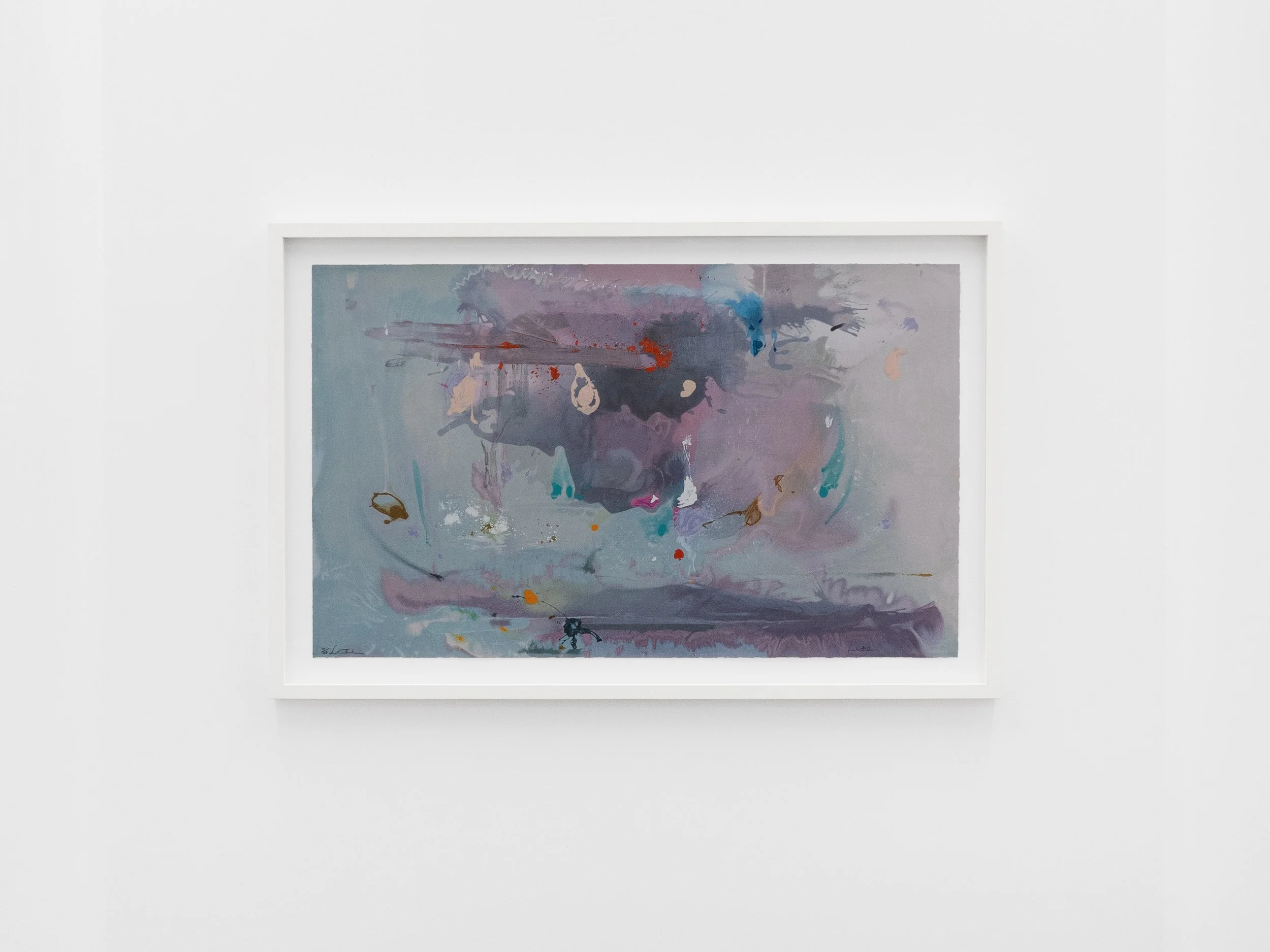
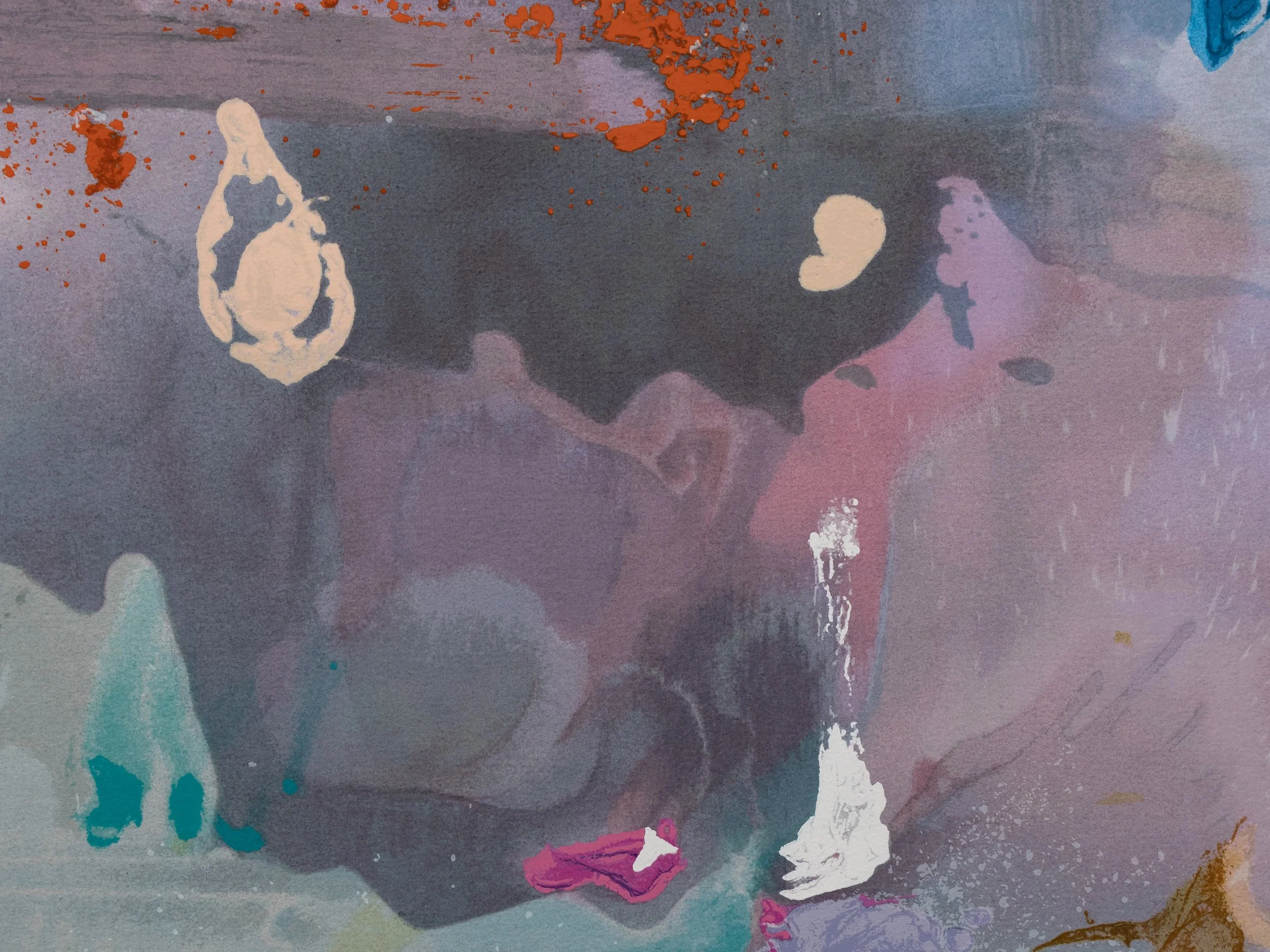
Abstraction has historically served as a means of articulating realities that transcend material form. From the spiritual aspirations of early modernist painters – embodied in the visionary works of Hilma af Klint and articulated in Wassily Kandinsky’s Concerning the Spiritual in Art – to the gestural languages of postwar abstraction, artists have turned away from figuration not as an act of negation, but as expansion.
Within this historical trajectory, Helen Frankenthaler emerges as a transformative figure. In the mid-twentieth century, she advanced abstraction through her soak-stain technique, pouring diluted pigment directly onto unprimed canvas laid out on the floor. This method allowed paint to be absorbed by the canvas like porous skin, creating the effect of colours and forms breathing and pulsating on the canvas. Paintings were no longer a predetermined site upon which an image was placed, but a field through which colours weaved, danced, and continually transformed even after the paint had dried.
Frankenthaler’s innovation was as much a technical breakthrough as it was a philosophical one. By allowing chance to guide the image’s emergence, her paintings unfold as records of time, gesture, and intuition. She fundamentally shifted postwar abstraction, inspiring artists such as Morris Louis, Sam Gilliam, Joan Mitchell, and Grace Hartigan. Frankenthaler’s shift toward openness and luminosity expanded the spatial and chromatic possibilities of the field, enabling a more fluid and atmospheric mode of abstraction to take hold.
The first time I felt fully absorbed by Frankenthaler’s work was during a visit to the San Francisco Museum of Modern Art while studying art history under Professor Alexander Nemerov at Stanford University. Interior Landscape (1964), measuring 266 x 236 cm, possesses an enveloping scale. When hung on a museum wall, it draws the viewer into its vibrational colour field. Teal blues, forest greens, and luminous yellows flood the picture plane with light and depth. The paint appears to be poured or soaked into the surface, producing a sense of openness and continuous movement. The meditative field of colour evokes the expansiveness of sky, water, or earth. But rather than depicting a literal landscape, the work refers to an internal or emotional topography. Its rapturous gestures hold mixtures of joy and beauty alongside melancholy and quiet tension, as if the full emotional spectrum of the human experience were distilled within a single field. Standing before Interior Landscape, I felt as though I were at the threshold of a portal, where consciousness has the potential to expand into infinity.
A decade later, in 2025, I encountered Professor Nemerov’s book on Helen Frankenthaler, Fierce Poise. Once again, I became drawn into the atmosphere of her interior world. Like her paintings, her life was ‘a waltz of colour dissolving as they come into being – forms disdaining to become the hardened shapes of nameable things and remaining a lyrical world of daydream.’ Frankenthaler’s world was one of daring pleasures, all-or-nothing spontaneity, and fearless courtship of failure – a life on the wing. Her joie de vivre translated onto the canvas in works such as Mountains and Sea (1953) and Grey Fireworks (1982), where gestural strokes capture the fluidity of becoming. Reflecting on her own practice, Frankenthaler remarked, ‘Every canvas is a journey all on its own.’ Her approach and legacy continue to resonate today, particularly among contemporary women artists who embrace chance, permeability, and transformation in their practices.
While immersed in the study of Frankenthaler’s life and practice, I serendipitously encountered the works of Anna Pakosz, Freya Fang Wang, and Meryl Yana: three artists from different parts of the world – Hungary, China, and France – who were all living and working in London at the time.
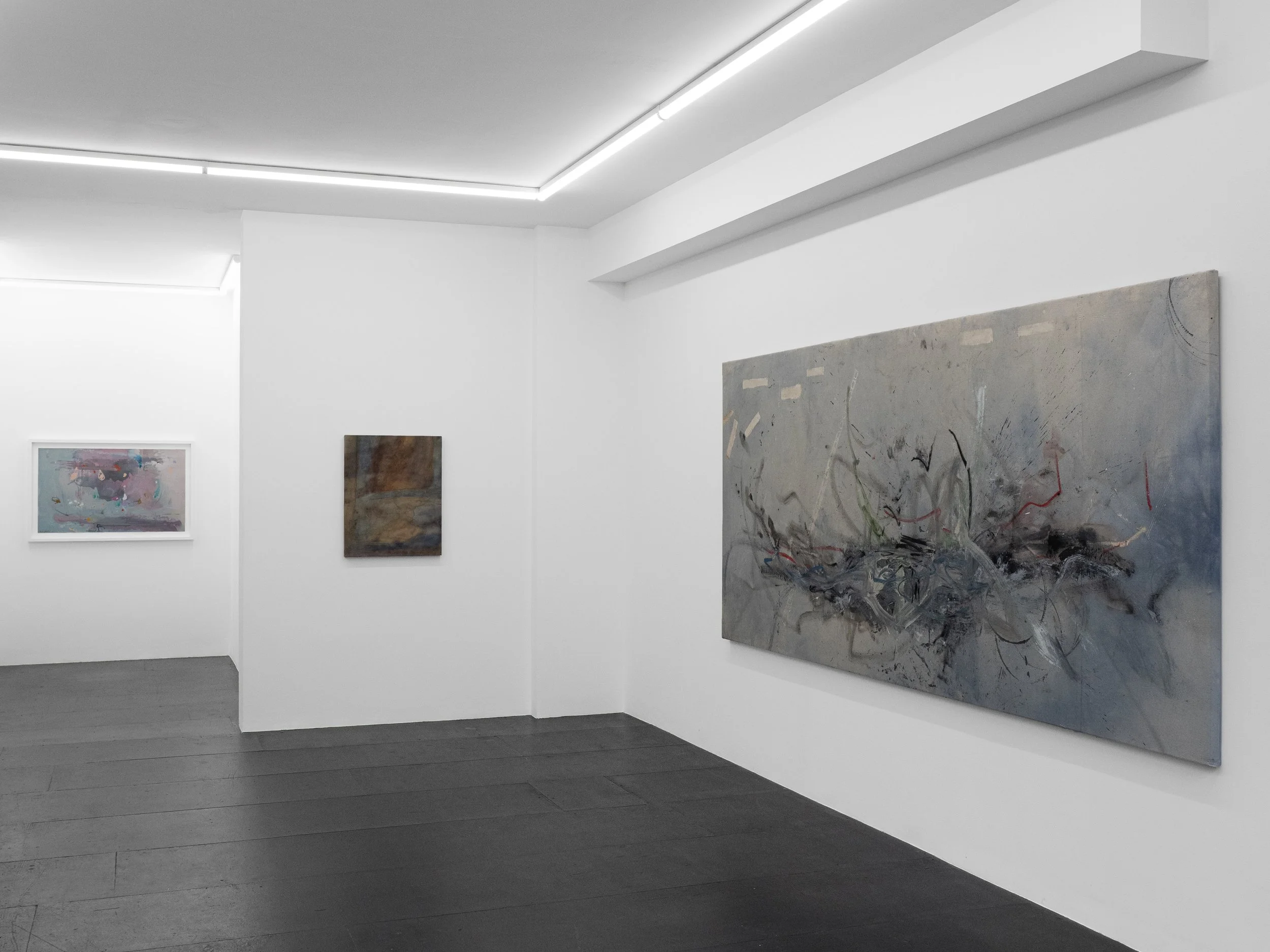
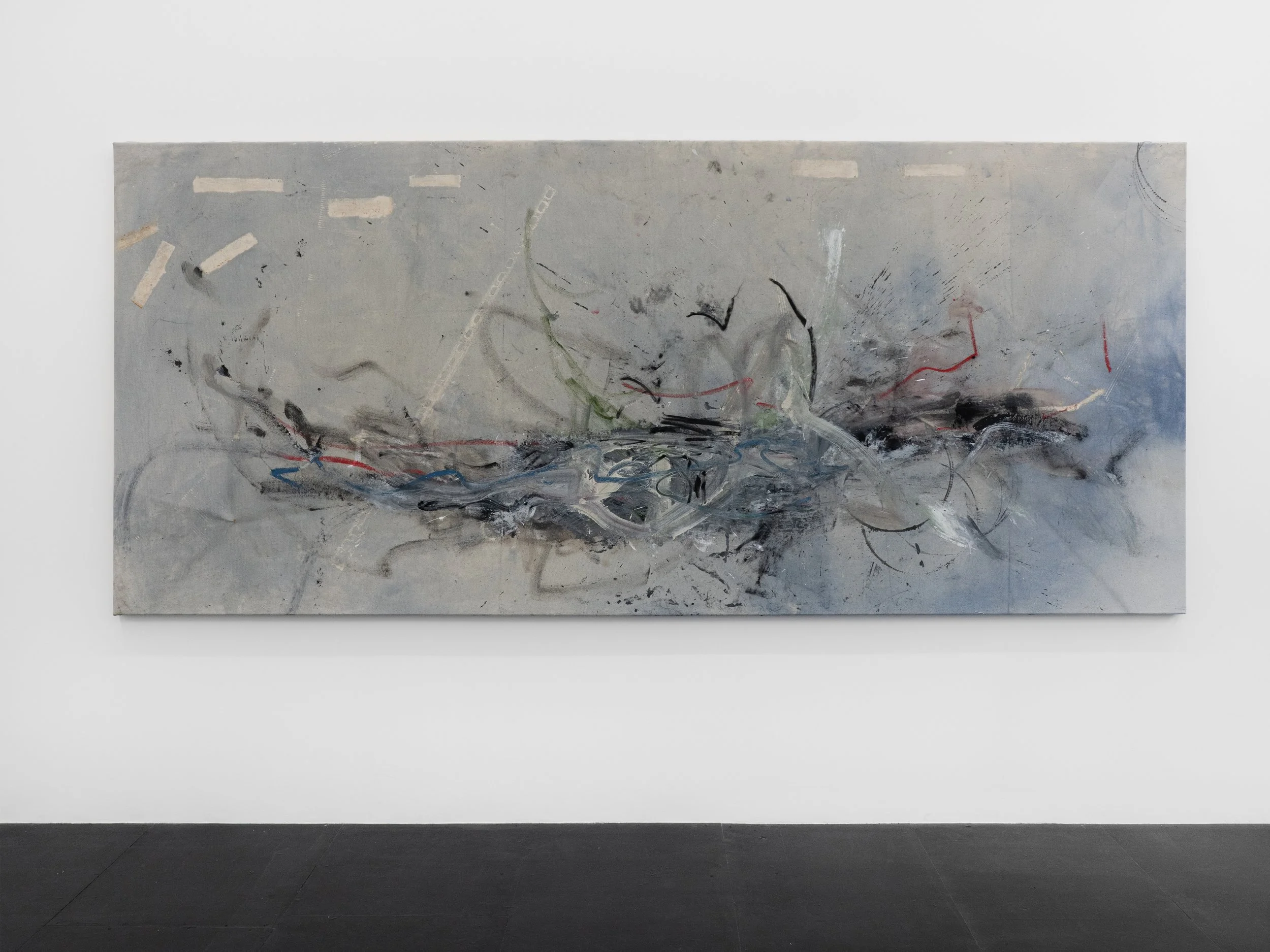
Anna Pakosz (b. 1991, Budapest) creates large-scale paintings that emerge from embodied movement: a kinetic investigation of matter, gesture, and surface. Constantly experimenting with materials such as porous canvas, stitching, rusted steel, bleach, and found textiles, her layered works reflect a fearless surrender to the charge of materials, their histories, and the possibilities that come from their interactions. Akin to Frankenthaler, she lays large, unstretched fabrics on the floor, inviting spills, stains, and imprints as active participants in the work’s formation. Oscillating between control and surrender, the artist has developed an unmistakable visual language that unites materiality and spontaneity to reveal raw, visceral gestures of becoming. Antony Gormley aptly described Pakosz’s practice as having ‘nothing to do with picturing, and everything to do with art as a place for potential… you’re left looking at [her work] as evidence of a time and a place where something happened.’ In this way, Pakosz extends Frankenthaler’s legacy, reasserting painting as a site of transformation – not an image to be viewed, but an event to be encountered.
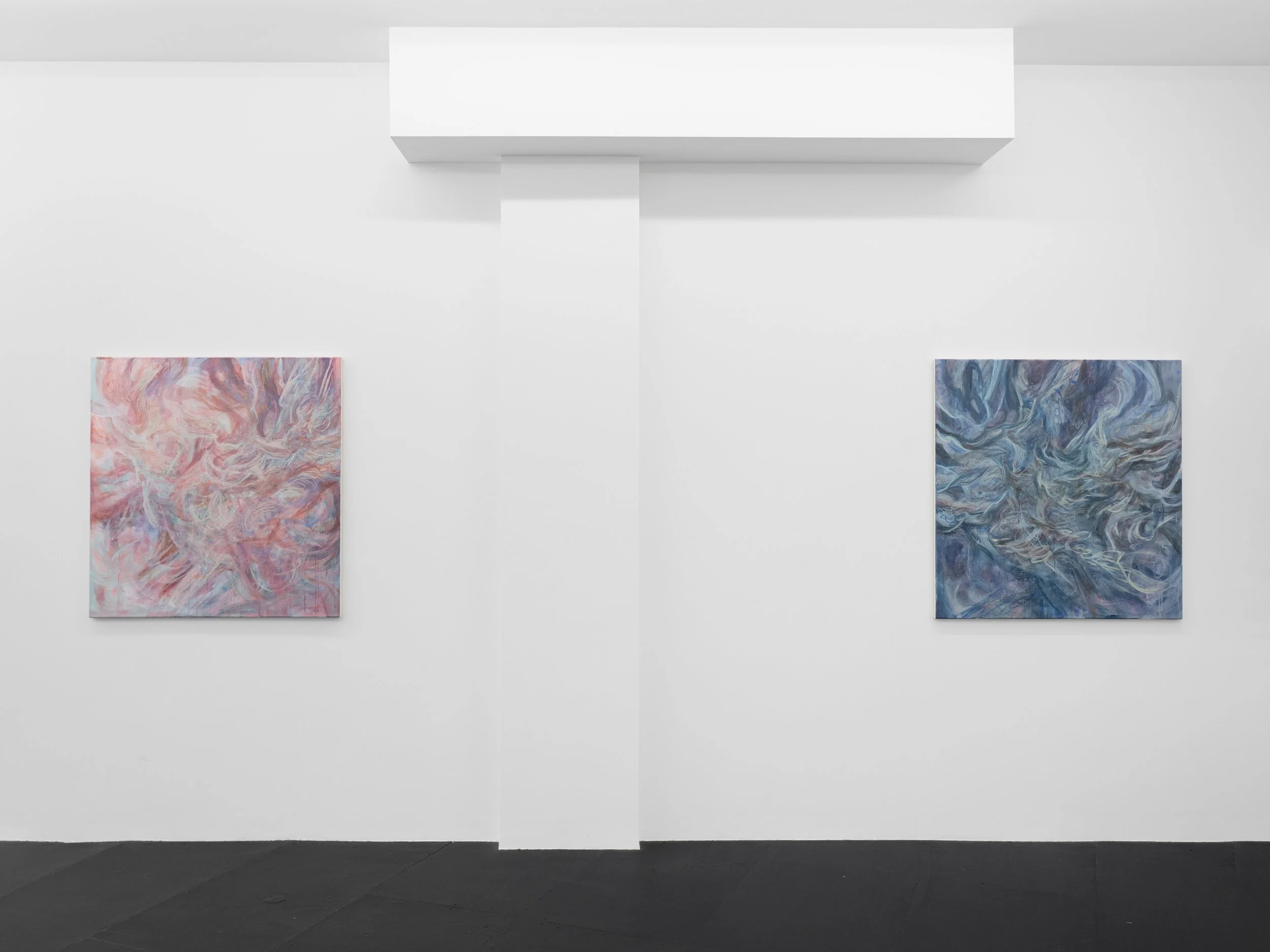
Freya Fang Wang (b. 1986, Beijing) creates immersive paintings informed by Taoist principles and the elemental rhythms of nature. Engaging her entire body and working with a richly layered combination of rice paper, acrylic, ink, plaster, and oil pastel, she produces surfaces that pulse with movement and depth. At once meditative and expansive, each work unfolds as a subtle field of energy. Her practice reflects a quiet attentiveness to the accumulated charge of materials, inviting the dissolution of fixed form and premeditated control. Chance, interconnection, and transformation are integral to her process, through which external energies and interior states become intertwined. Threads of harmonious colours weave back and forth in the translucent layers of her paintings, creating an immersive space that opens toward a sense of infinity. Created through an intuitive process of push and pull, her work resembles constellations that present painting as a portal rather than a static object.
Meryl Yana (b. Paris, 1998) centres her practice on abstraction as a site of emotional excavation and expansion. Gathering natural materials from her environment, she produces her own pigments through experimentation with their chemical reactions before painting, soaking, and rubbing them into canvases laid across her studio floor. Akin to an alchemist, she collects limestone from cliffs, vinegar, baking powder, hibiscus, limes, and other organic matter, sealing them in plastic bags under the sun to observe how the colours shift over time through fermentation and oxidisation. She conceives of the canvas as porous skin, pressing raw materials into its surface through a process that allows friction, resilience, tension, and chance to reveal the artist’s lived experience. The artist’s experimentation and encounters with her materials become a testament to the laws of chance and the possibilities of time. Distilling archaeological finds, animal bones, and fragments of the natural world into her own abstract language, Yana builds layered, atmospheric compositions that hover in the liminal space between landscape and interior state, an approach aligned with postwar abstraction’s embrace of chance and transformation.
Engaging with the work of Anna Pakosz, Freya Fang Wang, and Meryl Yana revealed how Frankenthaler’s legacy continues to live and breathe through the distinct visual languages of contemporary women abstract painters whose practices relinquish formal control in favour of openness and becoming. Pakosz does so through the physical charge of industrial and organic materials, Wang through a cosmological sensitivity to rhythm and interconnection, and Yana through an alchemical dialogue with the natural world. Together, their practices affirm abstraction not as retreat from reality, but as an expanded mode of engaging it.
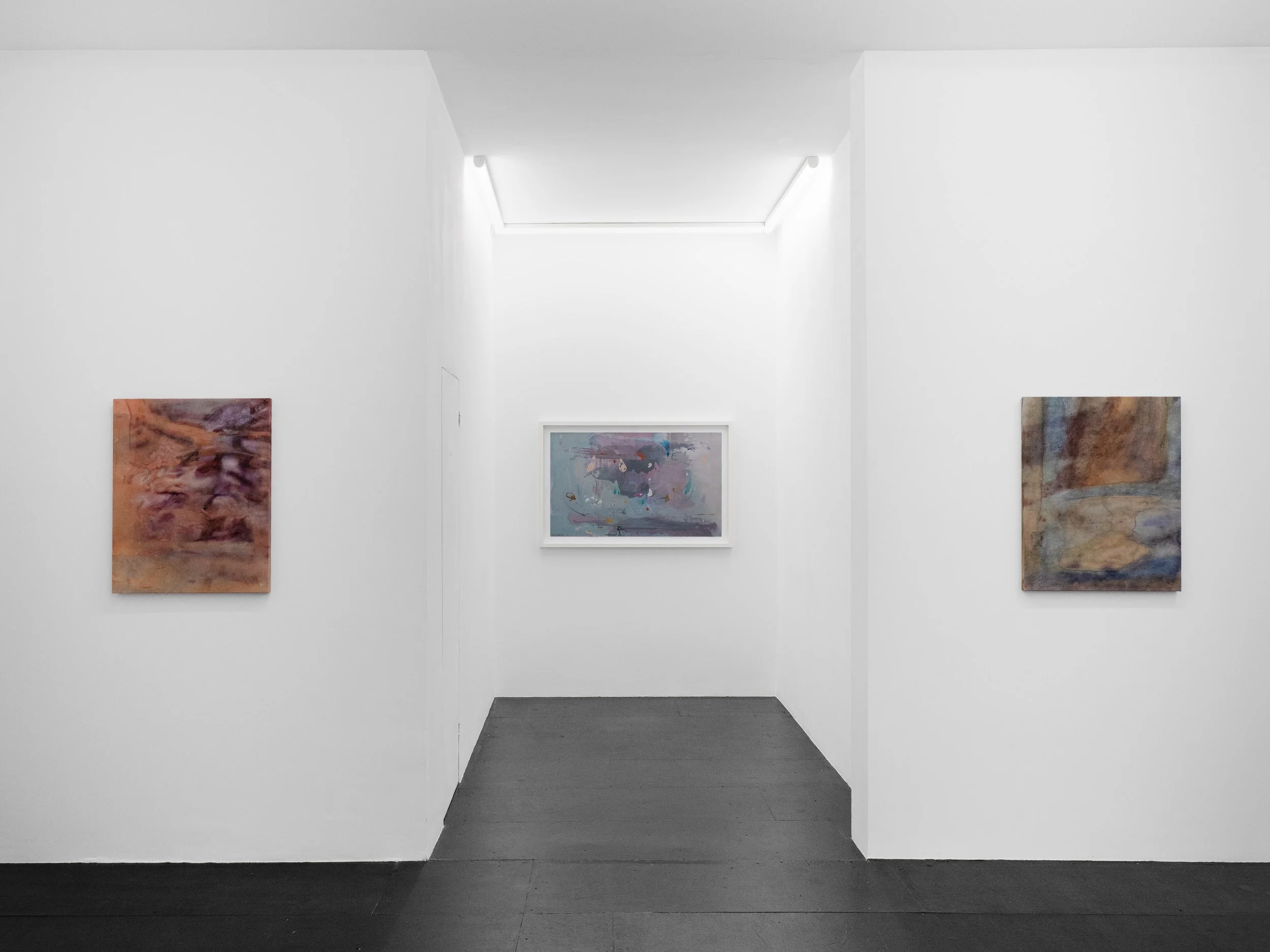
The exhibition Portals into Transcendence, which I had the pleasure of curating at Night Café Gallery, situates these artists within a lineage of women artists who have reshaped abstraction through material experimentation and openness to transformation. Frankenthaler’s influence extends beyond technique; it resides in her articulation of painting as an experiential journey. The three contemporary artists do not replicate her soak-stain method, but rather extend her ethos: a trust in the process, a willingness to relinquish boundaries, and a commitment to the canvas as a site of unfolding. While the three artists’ practices differ materially and visually, each engages abstraction as a space in which perception shifts and interior states are expanded.
The concept of the ‘portal’ provides a unifying framework. A portal implies passage – from one state to another, from material to immaterial, from the visible to something more expansive. In these works, painting becomes precisely such a threshold, transporting viewers into states of transformation, expansiveness, and heightened consciousness. In all of the works in the show, painting is more than a fixed image - it becomes something you move through. Each canvas becomes an opening: a window to interior worlds as well as realms beyond the physical. These paintings are landscapes of the mind, inviting viewers to step across thresholds into luminous, expansive dimensions. Fluid forms, pulsating colours, and shifting perceptions of light evoke continual metamorphosis, where fragments and gestures transform before the eye.
Portals into Transcendence positions contemporary abstraction not as a historical echo, but as an evolving continuum. The legacy of Frankenthaler is reaffirmed through the practices of Anna Pakosz, Freya Fang Wang, and Meryl Yana – each distinct, yet threaded together by abstraction’s enduring capacity to articulate expanded states of perception. Together, these works offer a journey of the mind. At once rapturous and contemplative, they echo the endless expanses of the cosmos, inviting us to step into transcendence.
29/04/26 - 23/05/26