Johanna Bath on the Poetics of Intimacy
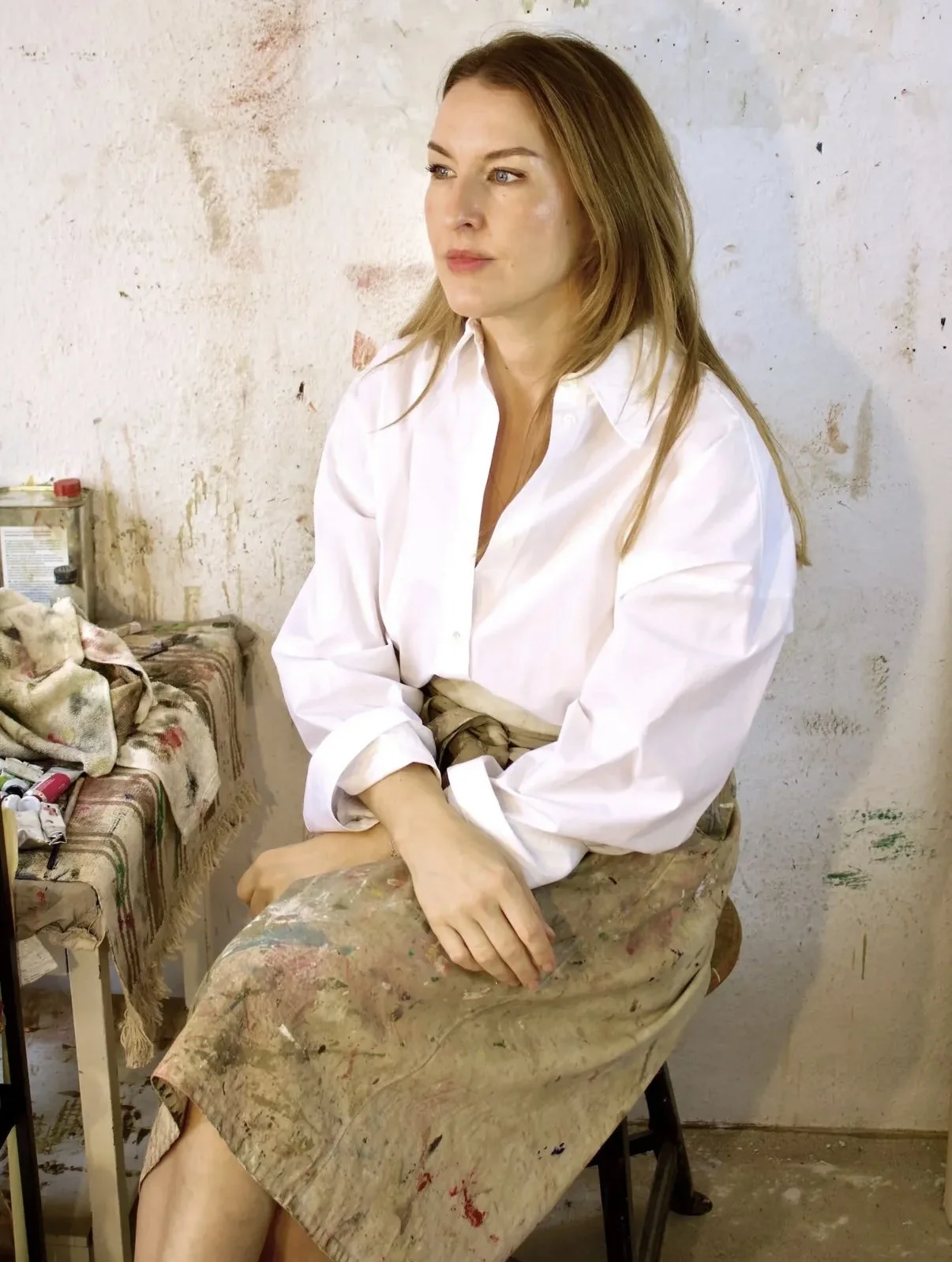
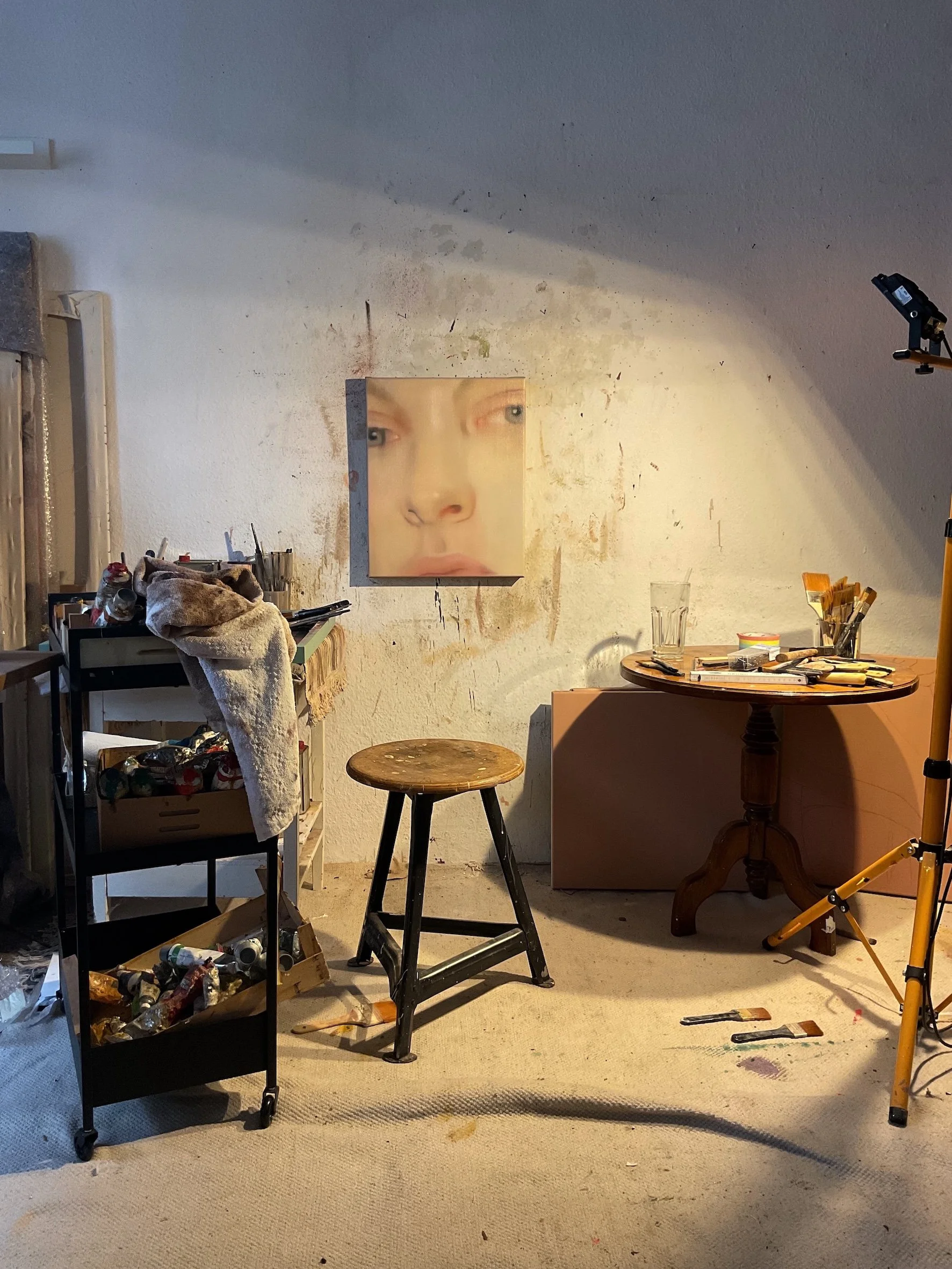
Johanna Bath’s paintings unfold in the delicate space between memory and sensation, where fleeting observations are distilled into images of quiet intimacy. Working primarily in oil, Bath is known for her softly cropped compositions and signature sfumato technique, through which bodies and gestures appear suspended in a hazy, almost timeless atmosphere. Her practice resists overt eroticism in favour of something more nuanced and psychologically charged - a distinctly female gaze that lends the work tenderness, restraint, and emotional subtlety. In our conversation, Bath reflects on the ways she records memory, the importance of sensuality through a female gaze, and her ongoing exploration of time within contemporary painting.
Bath (b. Germany, 1980) received professional training in Illustration Design at Bildkunst Akademie, Hamburg and a degree in Design Studies at the Hochschule für Angewandte Wissenschaft, Hamburg. The artist’s solo exhibitions include Enari Gallery, Amsterdam, Only Love Will Save Us (2025); Scroll NYC, New York, Burning Edge (2025); BLANKgallery, Shanghai, Flesh, and the Mirror (2024); Pipeline Contemporary, London, Shivers (2023); Part2Gallery Düsseldorf, Neue Arbeiten (2019). Her work has also been featured in numerous group presentations, including Make Room, Los Angeles (2025); Enari Gallery, Antwerp (2025); Soho Revue Gallery, London (2025); Alzueta Gallery Turó, Barcelona (2024); Scroll NY, New York (2024); YOD Gallery, Tokyo (2023); Pictorum Gallery, London (2023); and Heinrich Lübke Museum, Hamm (2020).
What brought you into the art world? Are there any memories from your childhood that you now see as formative in your journey to becoming an artist?
I never planned to become an artist and I feel like it happened organically. It was only when I was nearly done with my studies in illustration design that I felt a deep sense of belonging and a satisfaction from painting which I never felt anywhere else. As a child, I was very much into making things - not necessarily painting, but playing with materials in general, building things from scratch. I would dig in the garden, sew, make costumes, cook, bake, draw. I was quite an easy, content, and happy child, and I remember having a rare tantrum in front of a shop window which had a massive range of Faber-Castell Crayons on display. So there were definitely signs, and my parents should have known about my artistic inclinations.
Describe your work in three words.
Sensual, tender, poetic.
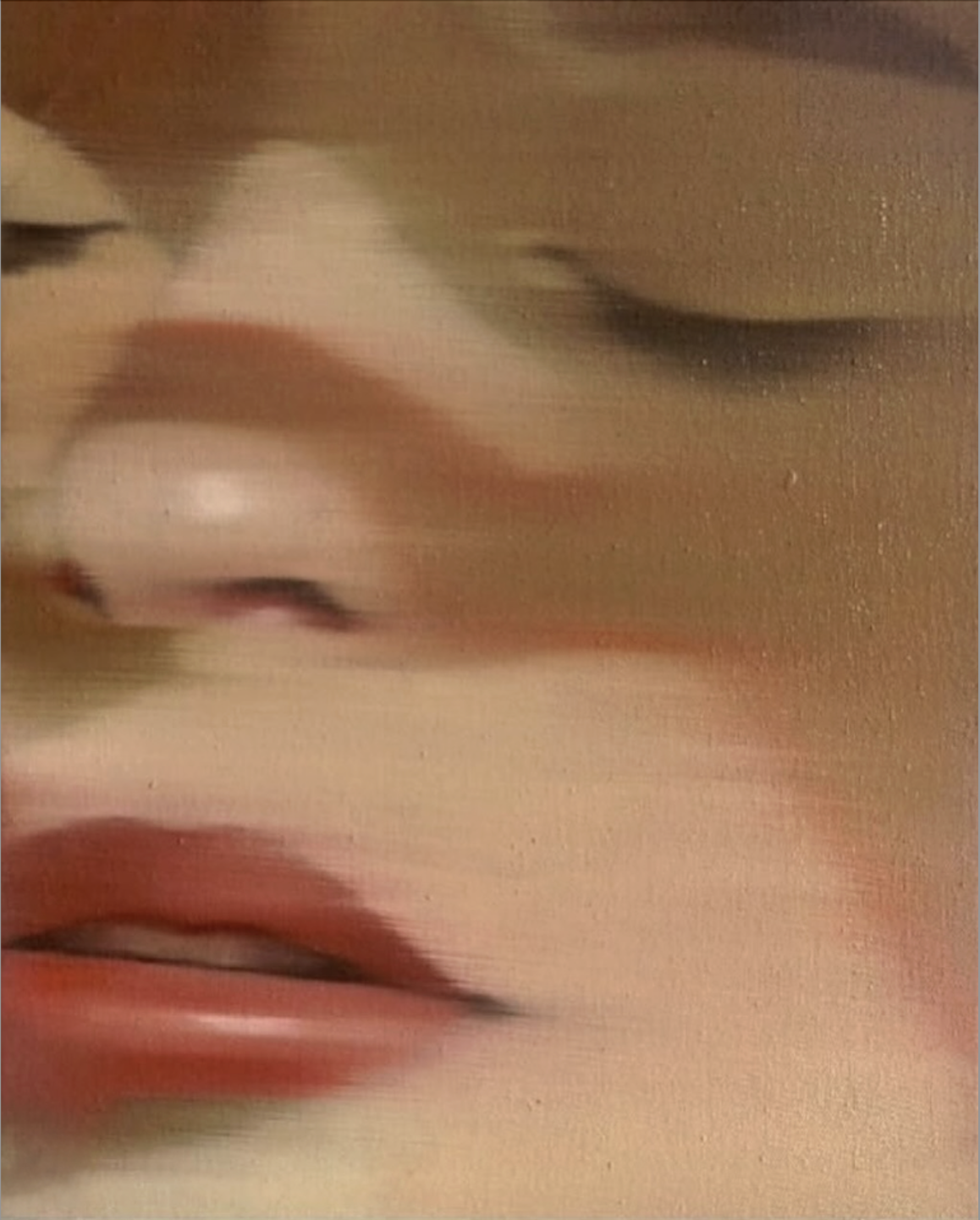
Ray, 2022. Oil and acrylic glaze on linen.
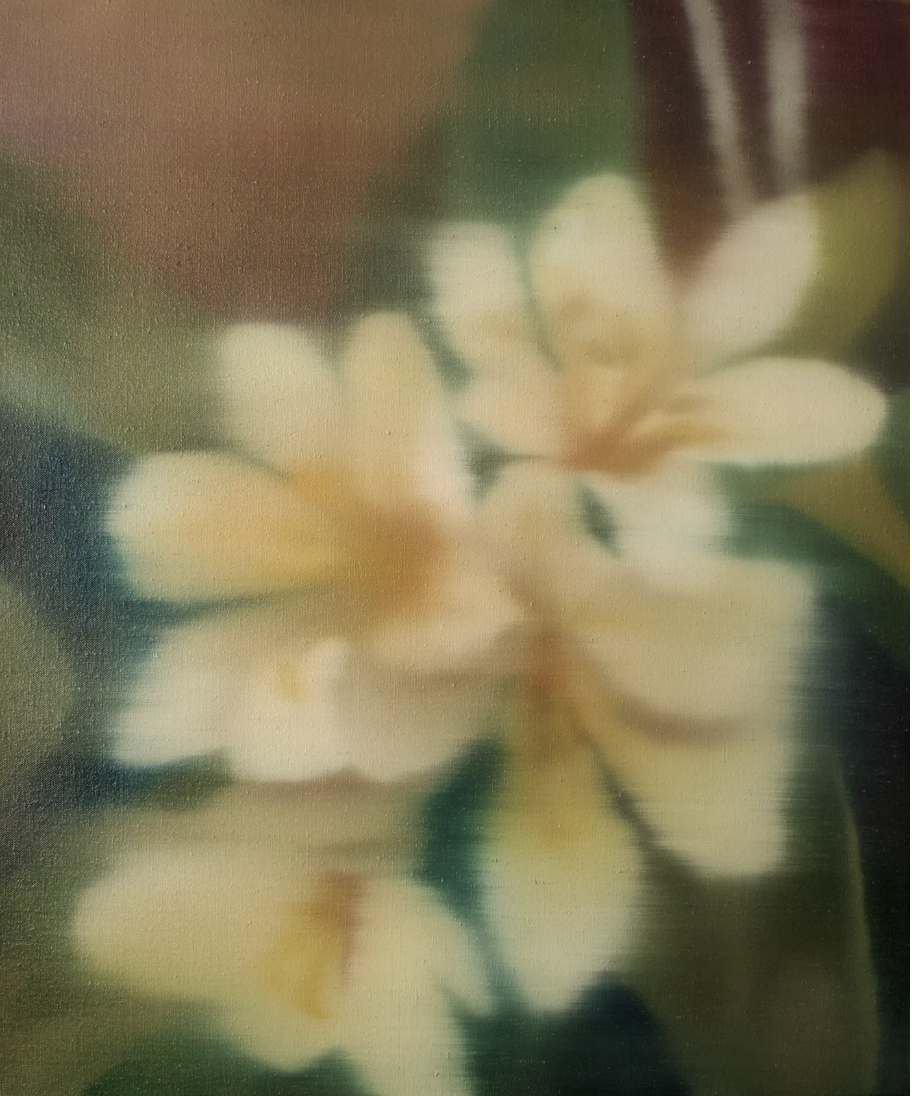
Exotic (butter yellow), 2025. 60 × 50 cm. Oil on linen.
Your works are deeply personal; do you work from your own photographic sources?
I do have a few pieces that are based on photographs of people I know but I realised I need a sense of anonymity to be brave enough to execute the motif. Sometimes, knowing the person attached to the piece feels too vulnerable and private, so I prefer relying on collected imagery from all over the place. Most of the time, the imagery that is the starting point for a piece feels neutral or trivial, and once it is transformed onto the canvas, it gets charged with a certain aura.
What guides your decision to isolate a particular detail for your compositions?
With the zoomed in and cropped compositions, I am replicating a split second of an observation. I feel like this is how my brain remembers treasured memories or memories in general: it’s impossible for me to go back and recall the entire experience. Instead, I get snippets of an image. The way a lip curved, a birthmark, a brief eye contact, a flower against the sky. It is also very important to me that it is not about the person depicted but about an atmosphere. I also like that there is so much more room for imagination if you only get hints.
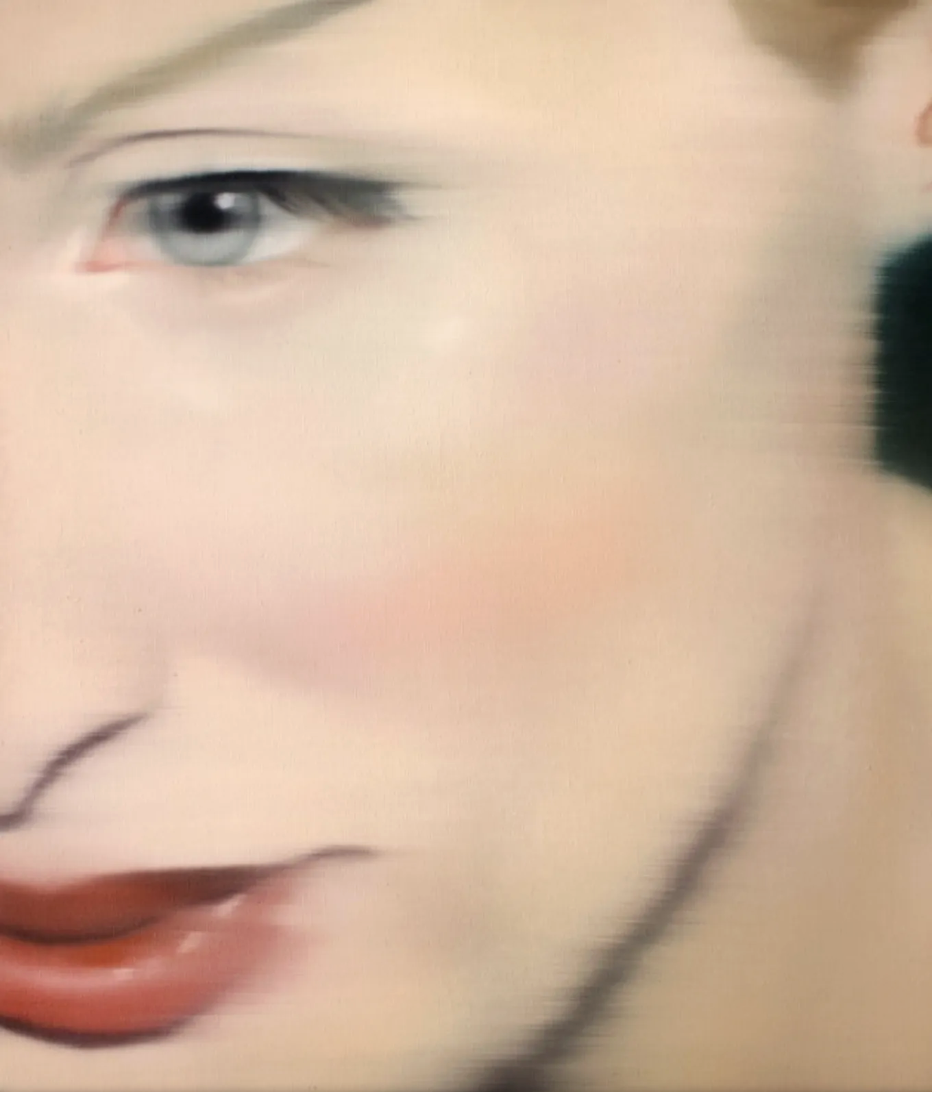
Light I (Caroline), 2025. 70 × 60 cm. Oil on linen.
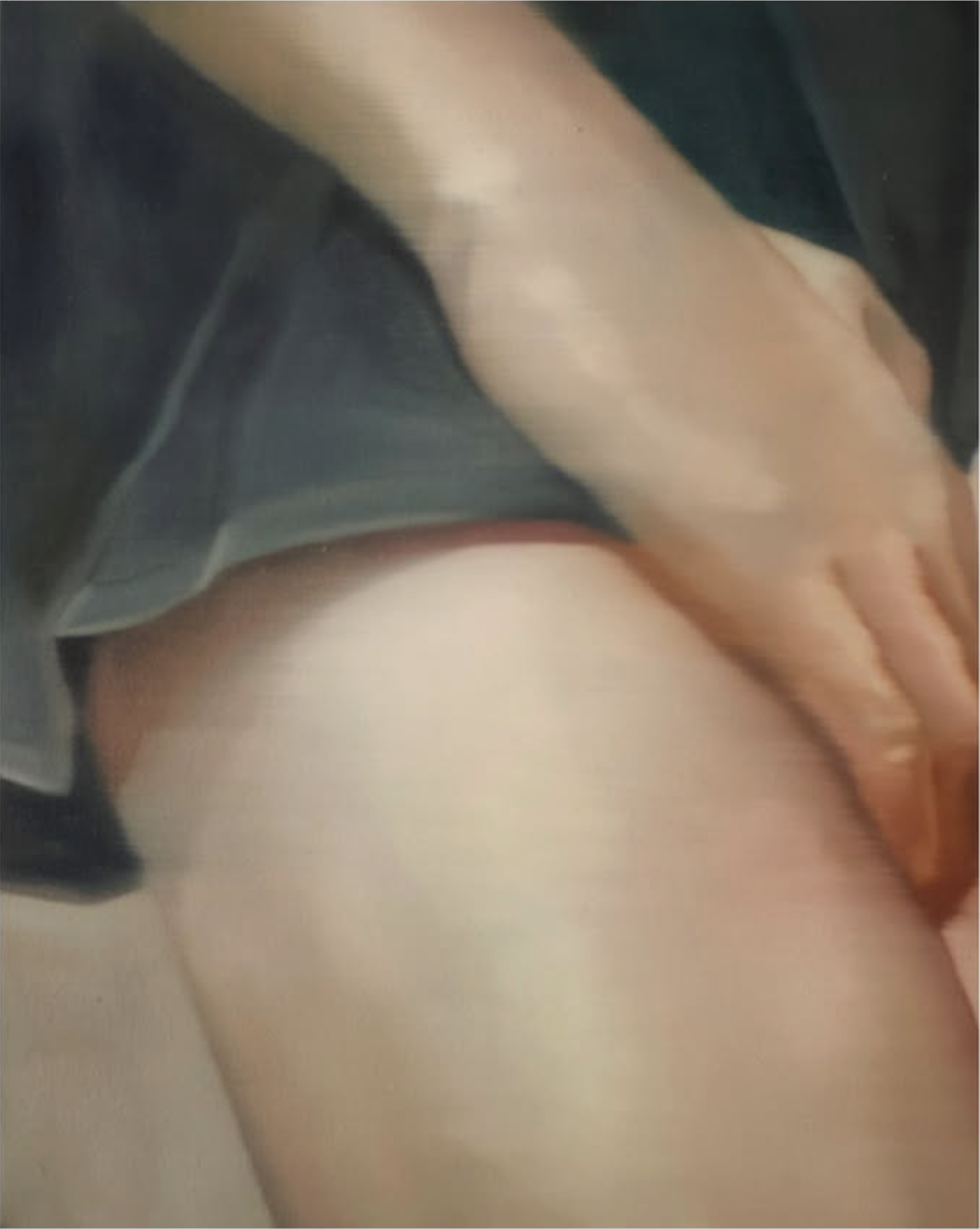
Lap, 2025. 40 x 50 cm. Oil on canvas.
Historically, explorations of time in art have often been pursued through performance, where duration is materially enacted. What does it mean for you to return this investigation to painting, a medium traditionally associated with stillness and permanence?
I think that my work is quite a paradox. It deals with the passing of time, its movement and the human ability to go back and revisit memories. Yet it simultaneously invites contemplation and stillness.
Painting is traditionally understood as a frozen medium, fixed in a single moment, but with the sfumato technique - where I blur and drag the oil paint into a state of haziness - the image feels like it is moving. It also feels as if it is detached from time, unruly and not willing to settle. At the same time, it still manages to radiate calmness, even stillness. I often describe it as a vacuum where time seems to be absent.
The partial and intimate nature of these bodily images suspends the subject between exposure and concealment. How does this tension shape your exploration of femininity and romantic encounters?
Fueled by personal experience and also depictions of women’s bodies in art history, I was eager to create images of seduction that are an antidote to the overwhelming amount of imagery already existing heavily characterised by the male gaze. I wanted to make work that is an antidote to blatant eroticism or depiction of flesh and skin. Instead, my focus is on the elegance, thrill, and daintiness that emerge through the female gaze - within the body, and in the charged space between skin and clothing. The work is about carefully observing, but also teasing, with calculated restraint.
I wanted to make work that champions sensuality and highlights the female body, seen from a female point of view to be highly enjoyable for a female audience. I felt there is so much more room for nuances here. It was important to me to create an atmosphere of intimacy whilst giving the impression that you are invited and welcomed as a viewer.
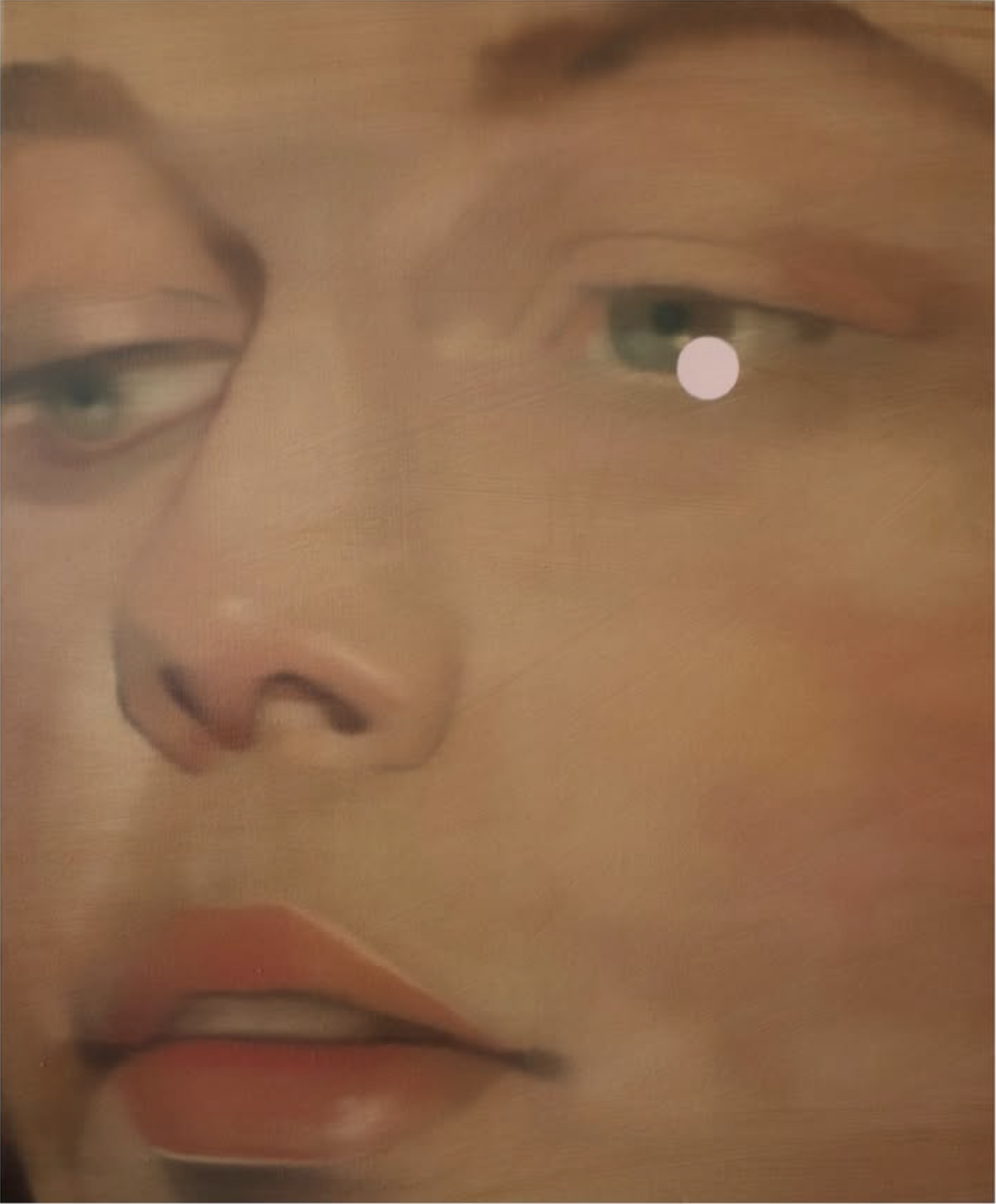
Rivet, 2025. 50 x 60 cm. Oil and acrylic glaze on linen.
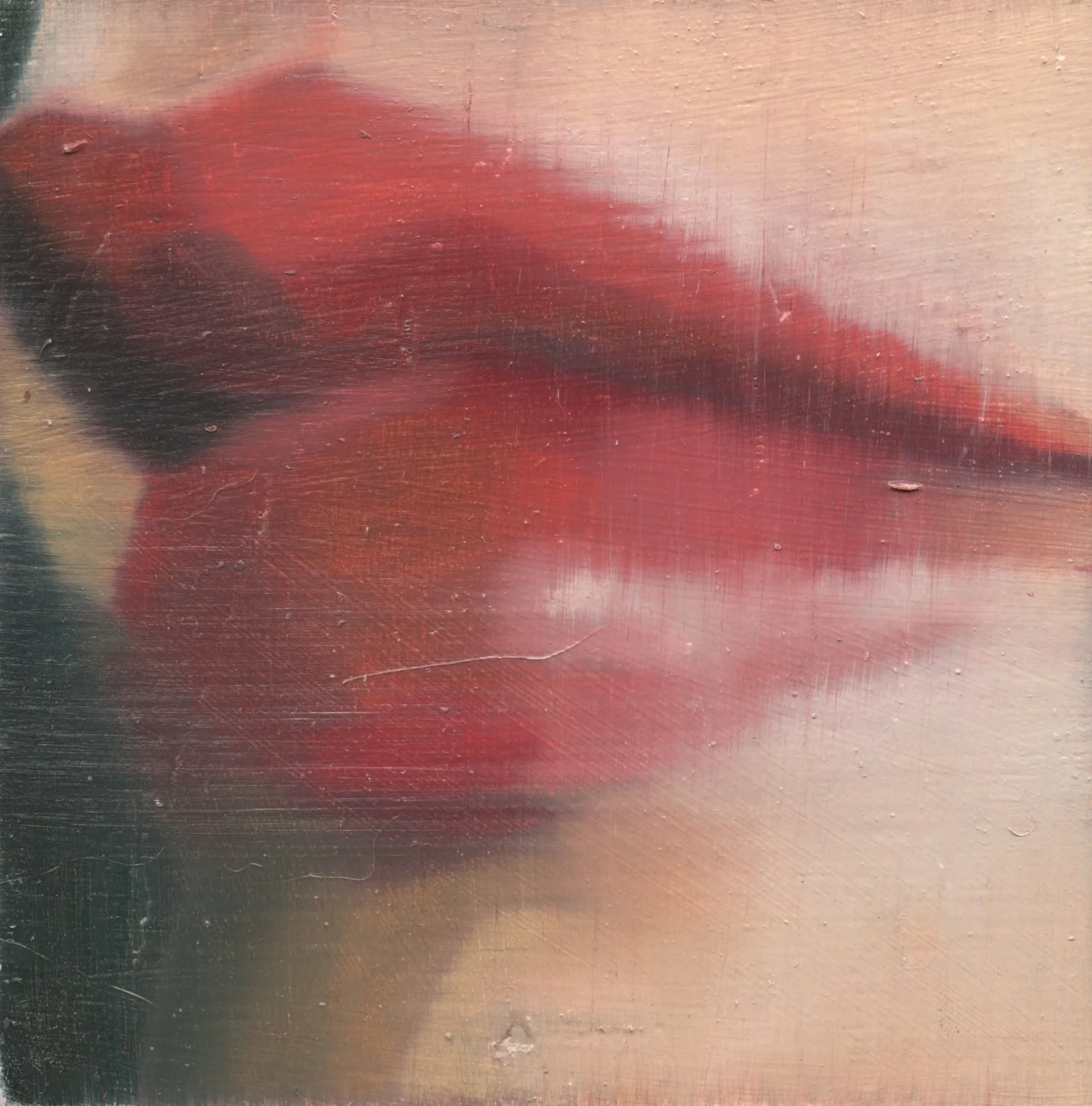
Johanna Bath’s creation for AOAP International Women’s Day charitable auction
I was thrilled that you created this beautifully intimate work on plywood for Art on a Postcard’s International Women’s Day auction. The theme of the campaign is ‘Give to Gain,’ encouraging a mindset of generosity and collaboration – can you talk about how and if this resonates with you?
The theme deeply resonates with me as I have always felt collaborating with women, cheering for them, giving and receiving advice had such an empowering impact - on both sides. I feel a special admiration and bond with women and I think it is a beautiful thing to have each other’s backs. There is an understanding and a sense of allyship among women that once we fully submerge ourselves in this shared awareness, we become, as a community, largely unstoppable.
What are you currently working on, and what feels most exciting in your practice right now?
I am working on paintings that focus on a women’s lap, referencing the infamous “the origin of the world“ by Courbet but in a much more G-rated version. Making paintings about touch, tease and sensuality can turn into either blatant porn or Kitsch very easily.
There is a very fine line between an elegant depiction of an authentic vibe and a cheesy painting about eroticism so I am testing out the waters to make sure I get it right.